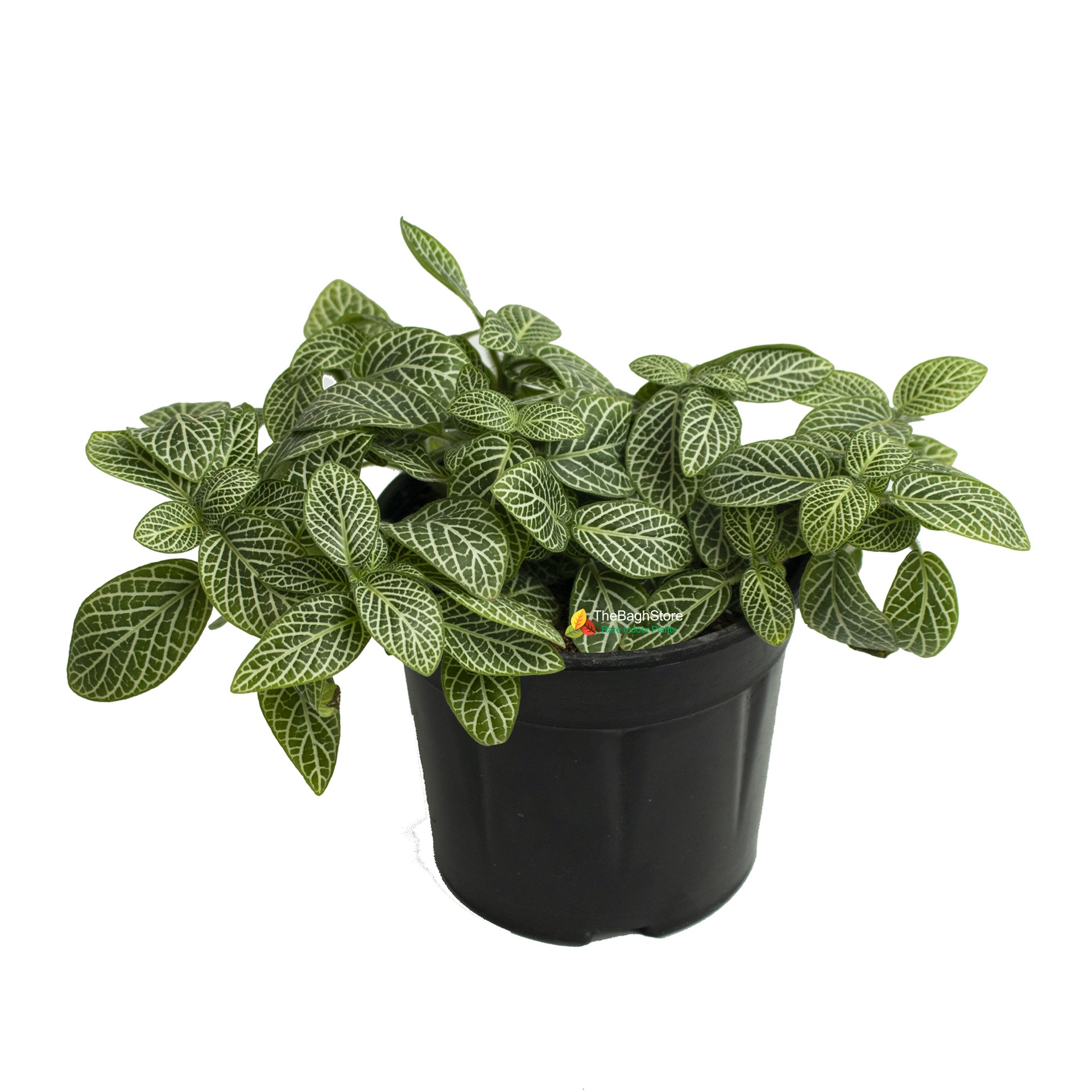
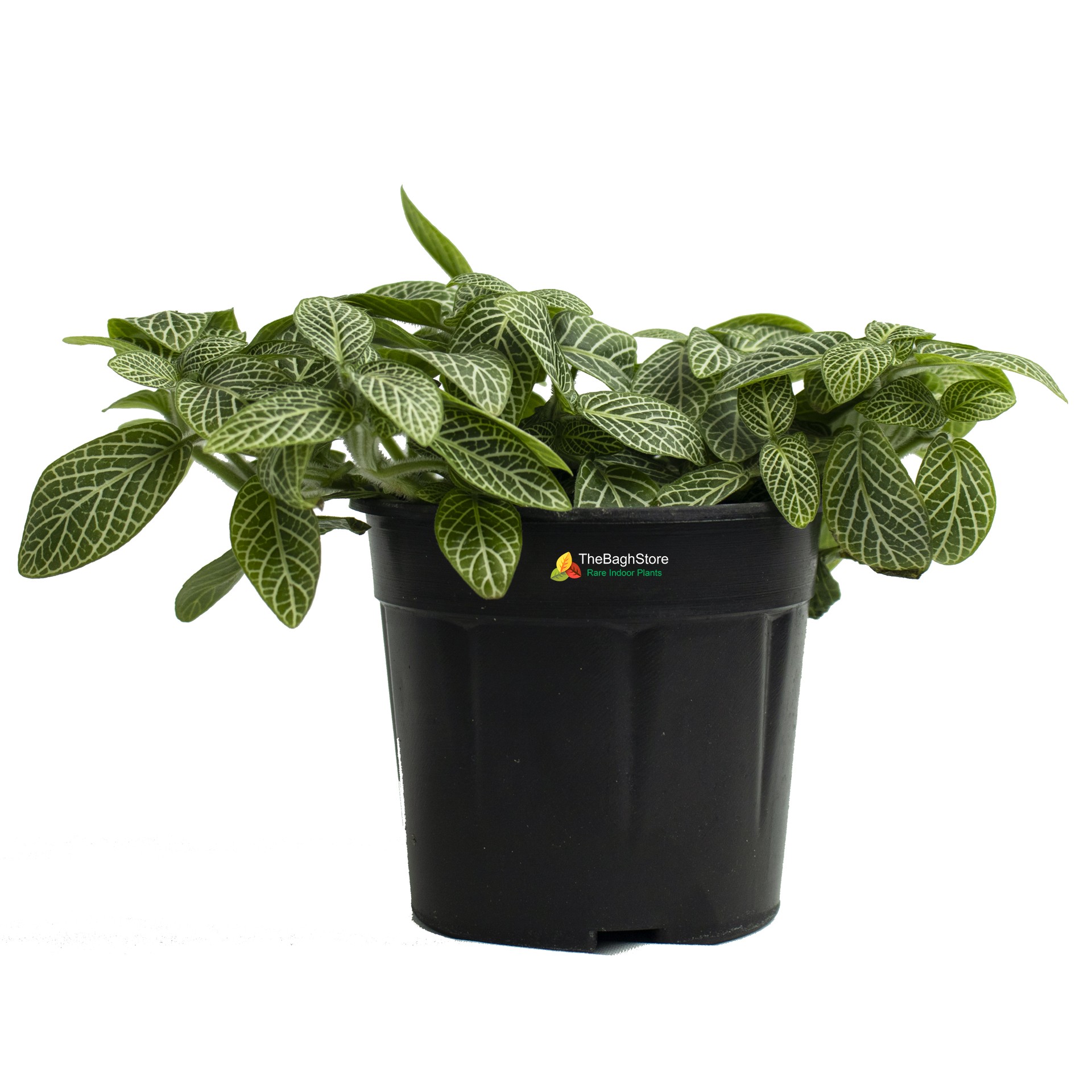
Fittonia Albivenis is a flowering plant of the Acanthaceae family that is endemic to Colombia, Peru, Bolivia, Ecuador, and northern Brazil's rainforests. It's an evergreen perennial with dark green foliage with white or scarlet veins that contrast sharply. It's also known as a Nerve plant or a Mosaic plant.
General
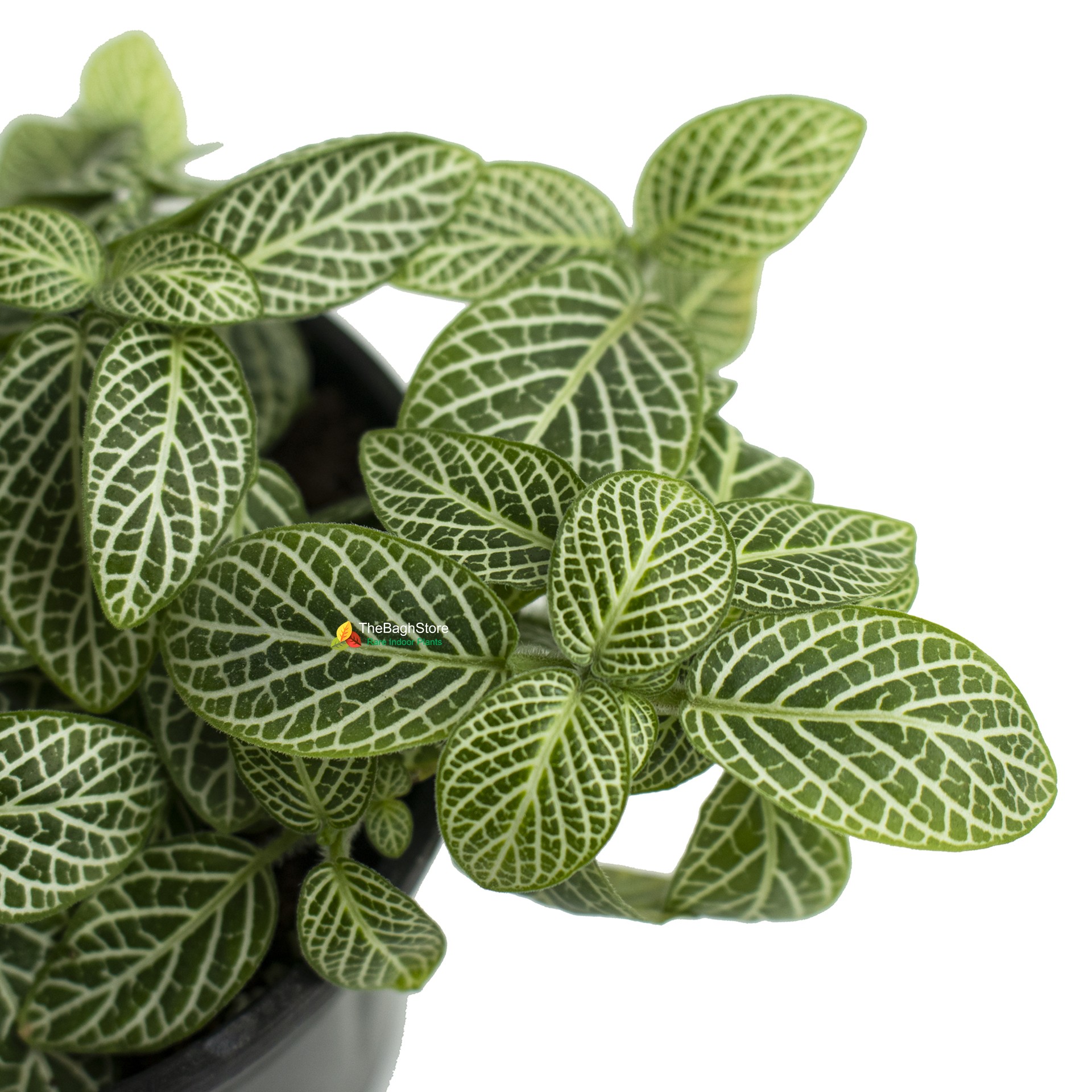
Fittonia Albivenis is a sprawling evergreen shrub with 7 to 10 cm long, glossy green ovate leaves with white to deep pink veining.White Nerve stems are covered in a short fuzz. After a while, little buds may form where the stem splits into leaves.The Nervatura can also be carmine-red in some varieties. The flowers are white to off-white in hue and are tiny.When grown as a houseplant, the blossoms of the nerve plant are rarely visible.Keep your Fittonia in your home's balcony garden.Sunlight
Bright, indirect light is ideal for your Nerve Plant.Your Nerve Plant may lose part of its bright colour if grown under low light, and growth may be slowed.Exposure to excessive sunlight might cause the leaves to burn.Watering
Water your Mosaic plant when the soil is dry.Your Fittonia likes being wet, but not soggy.Soil
Place your Fittonia Albivenis Plant in well-drained soil. It would be ideal to use a moisture-retentive potting mix.Aside from that, a peat-based potting mix is a good choice.Fertilizer
A fertiliser isn't truly necessary for your Mosaic plant.From spring to the end of summer, feed once a month with a basic houseplant fertiliser diluted to half the recommended strength.A tiny hole is excavated in the soil before winter arrives, and diluted water soluble fertiliser is buried in the soil, followed by fine sand.Toxicity
Your Nerve Plant is non-toxic to pets and kids.Additional Care
Your Fittonia will grow in a terrarium since it enjoys humidity. Get a glass jar with or without a cover, layer gravel or rocks, then fill with soil to build a terrarium.Plant your Fittonia and surround it with extra soil, watering lightly. If the space in your vessel allows, add multiple plants.Your Fittonia won't need to be watered as frequently as if it were planted in a pot because terrariums keep humidity quite well.Troubleshooting
Is your Fittonia Albivenis looking saggy and deflated? Please don't be alarmed. This is completely normal and can be easily remedied. Your plant is most likely thirsty and could benefit from a drink.Is your Plant suffering from Root rot? It means you have overwatered your plant. Repot it as soon as you can.Is your Plant having limp leaves? It means you have allowed your Fittonia to become too dry.






Reviews
There are no reviews yet.