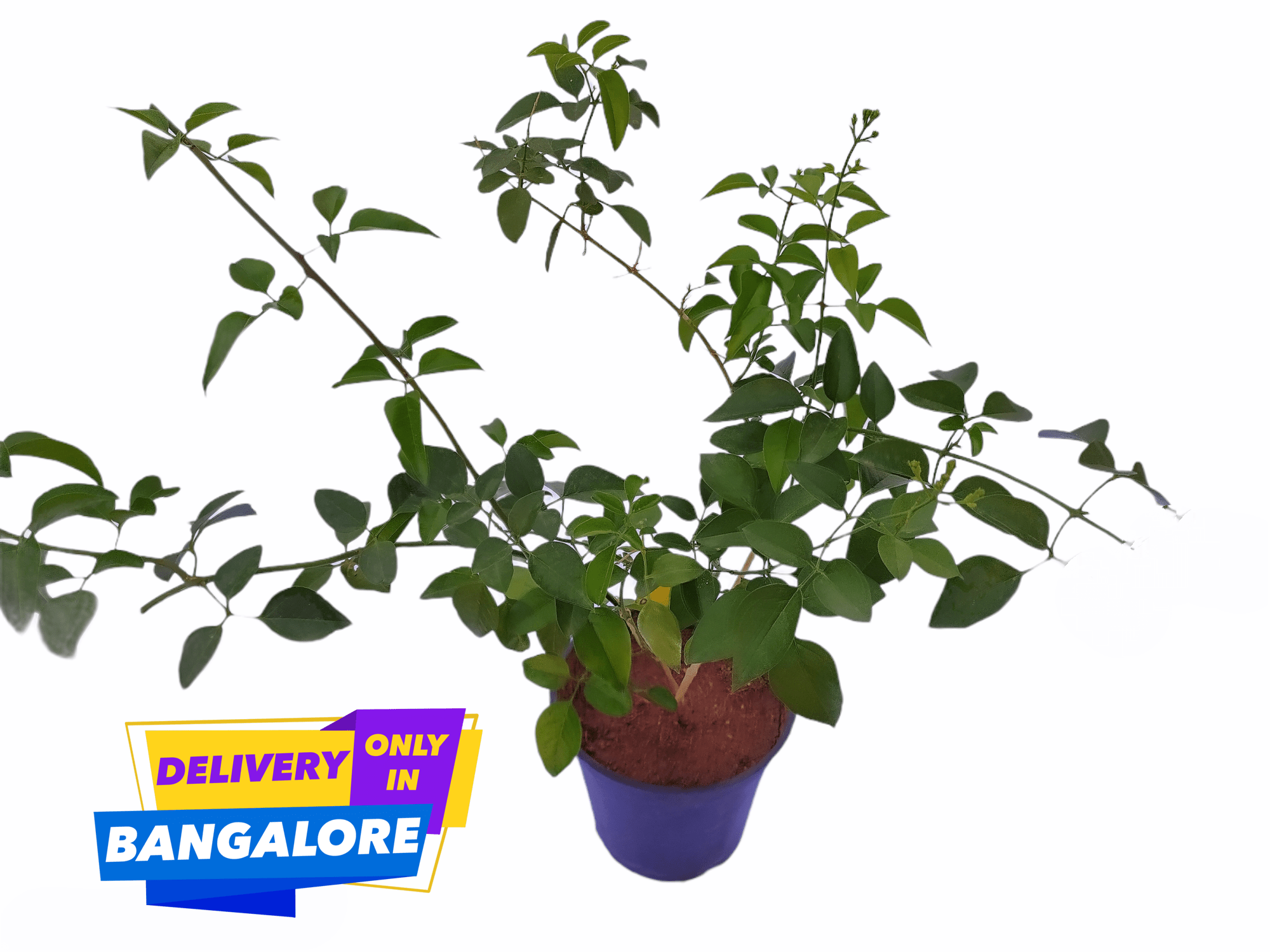
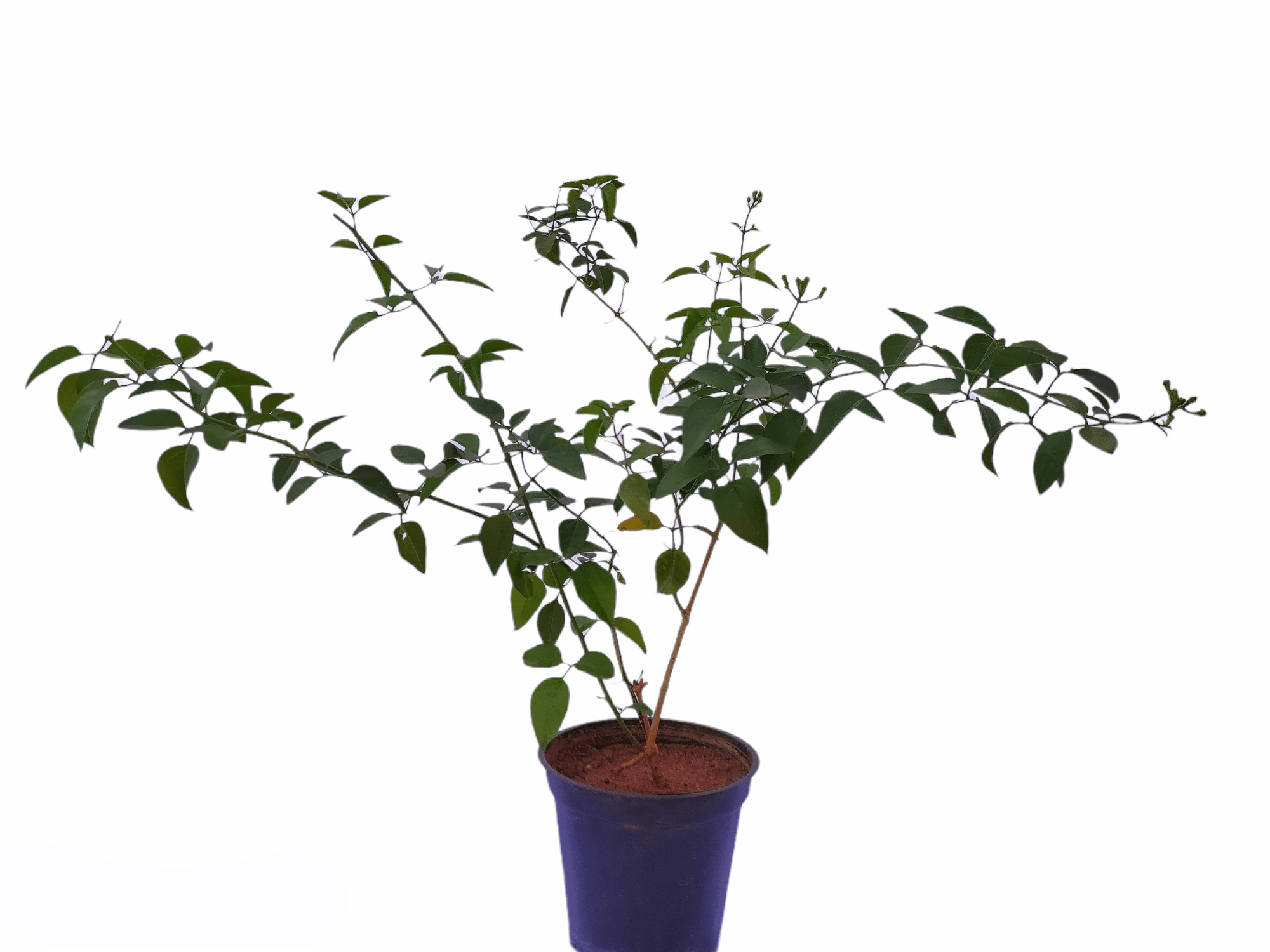
An exotic plant, Jasmine Plant is one of the most popular house plant due to its sweet fragrance and medicinal uses. With their green foliages and white petalled flowers, they look absolutely delightful to watch. It is an easy-to-care-for plant.
General
The Jasmine Plant is a native plant of the areas of olden Eurasia.Your Jasmine Plant is a medicinal plant that is used to treat liver and stomach-related disorders.Your Jasmine Plant can grow up to 5-10 feet tall when grown indoors.Sunlight
The Jasmine Plant prefers direct sunlight or bright indirect sunlight to maintain the color of its foliage and to bloom its best.Your Plant requires a temperature of no less than 7 C or their health may start to decline. Hence, you must keep your plant indoors during the winter season.Watering
Water your Jasmine Plant only when the 4 inches of the topsoil is dry to touch. You must water them twice every week during the summers and once every week during the winters.Your Plant prefers an environment with over 50% humidity, and hence, you should consider keeping them in your bathroom or kitchen area.Soil
Your Jasmine Plant grows well in well-draining, aerated, and fertile soil.Fertilizer
The Jasmine Plant is not a heavy feeder but regular feeding will boost its growth. You can use a fertilizer with a 7-9-5 NPK Ratio or any organic fertilizer for your plant to fertilize them once every month in the summer season.However, during the winter season, you must withhold any fertilizer use as it is the natural resting period for your plants.Toxicity
Your Jasmine Plant is considered to be toxic for pets and humans.Additional Care
You should prune your Jasmine Plant once every month by clipping odd dead leaves, flowers, and twigs from the plant to maintain its beautiful appearance and to prevent it from becoming leggy.Make sure that you are using a terracotta or mud pot that won't trap water inside it because your show Plant roots are prone to rot.You should repot your interior plants once every year in a pot that is longer than a size bigger than the current pot to help your exotic plants grow the best during the spring or summer season. You must use a new potting mix for your plant then.Troubleshooting
The Jasmine Plant leaves turning yellow: It is an indication of iron deficiency- Feed your plant with a fertilizer with a trace of iron in it.The Jasmine Plant leaf tips turning brown: This is caused due to underwatering or overwatering issues- Water your plant only when the top 3 inches of the soil is dry.