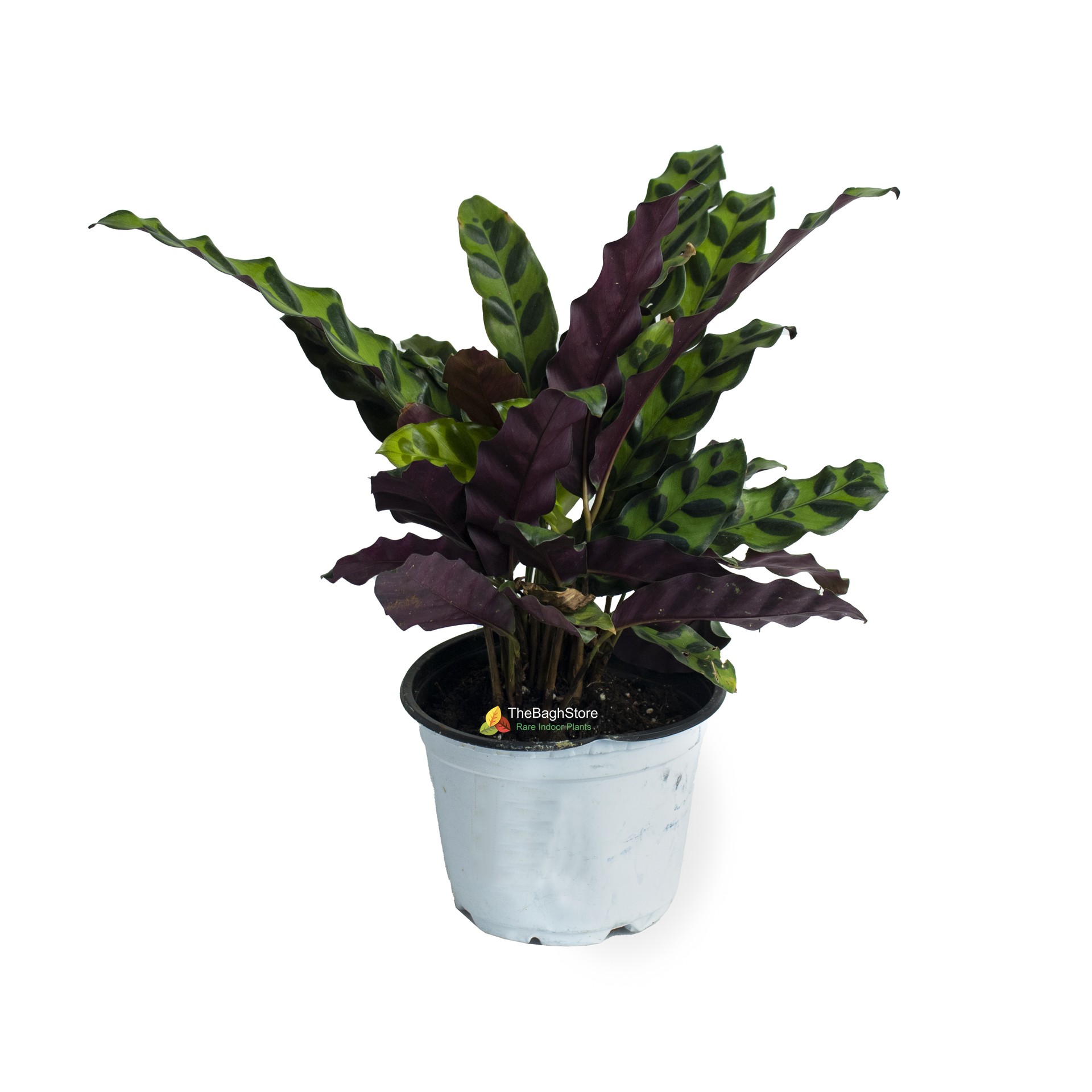
Calathea lancifolia is a strappy, speckled perennial with rich purple undersides. Rattlesnake Plant is the common name for this plant. The Rattlesnake plant, which is native to the Brazilian jungle, thrives in moist, warm, semi-shady settings.
General
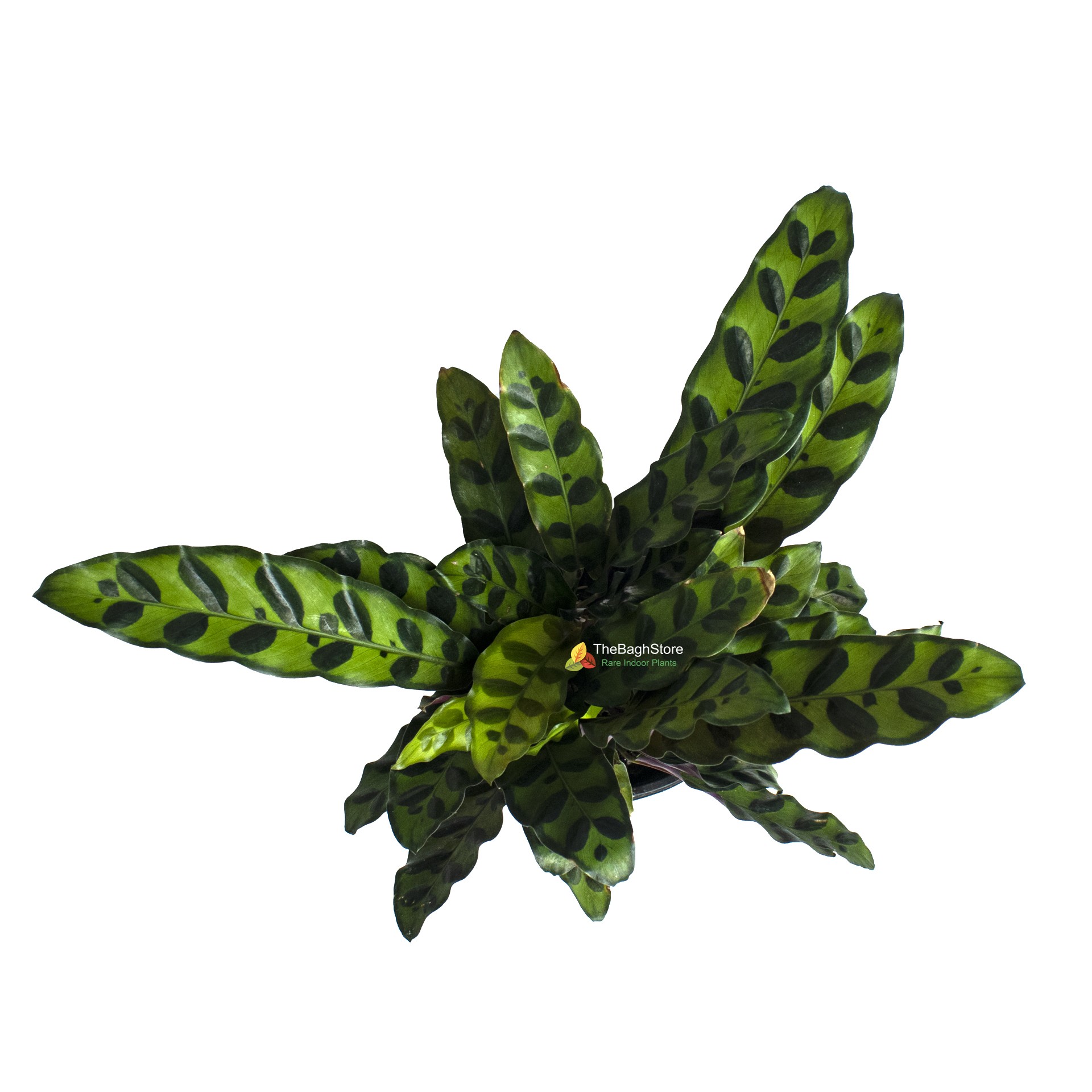
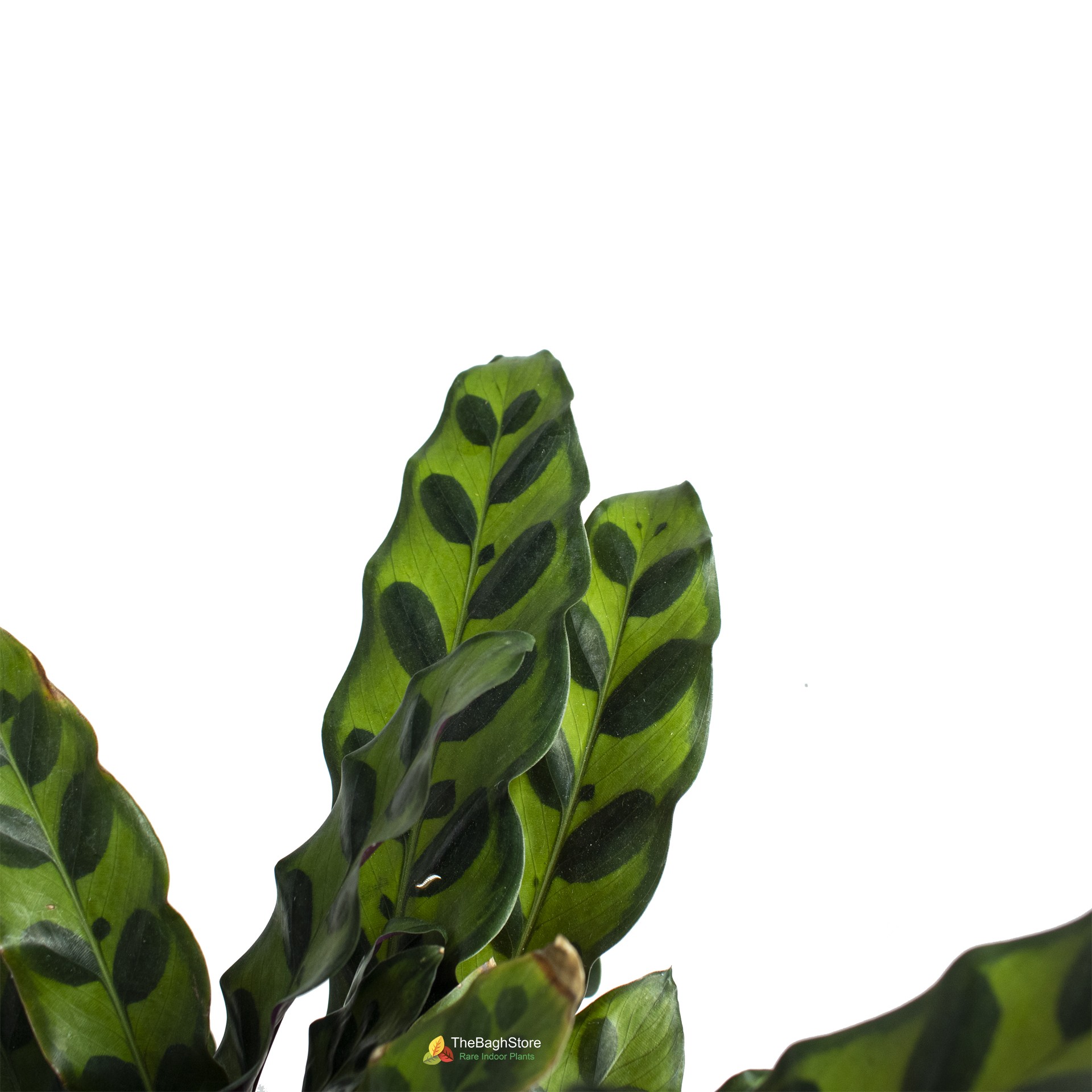
The Rattlesnake plant grows up to 30 inches tall.The huge leaves have a variegated pattern with varying hues of green and a wavy pattern along their edges.With their gorgeous purplish-red tones, even the undersides of the leaf are eye-catching.The Calathea Peacock has little yellow flowers in late spring in its native location.As it rarely flowers inside, you'll be growing this Rattlesnake Calathea plant for its remarkably attractive, lengthy, and exquisite foliage as a houseplant.Sunlight
Place your Calathea Lancifolia in bright Indirect Sunlight.The colourful speckled markings will begin to fade if your exotic plant is exposed to too much direct sunshine, therefore filtered light is the ideal option.If you want to put your Rattlesnake plant in a window, choose one that doesn't get a lot of afternoon sun or use shades to soften the light.A bright area in a conservatory or a well-lit room away from direct sunlight can also be effective.Watering
Water your Calathea Lancifolia plant when the top 1-2 inches of soil is dry.Your Rattlesnake plant will need to be watered frequently during the summer months.It's critical to keep the soil or potting mix moist.Allow the top layer of soil to dry out before watering again throughout the winter.Soil
When it comes to soil, your Calathea Peacock plant needs well-drained soil.Despite the fact that your Rattlesnake plants cannot tolerate standing water, they prefer to be kept moist.A light sandy soil or a potting mix consisting of one part perlite and two parts peat might suffice.Alkaline soils should be avoided.Fertilizer
During the spring and summer growing season, your Rattlesnake plant will appreciate being fed once a month.No fertilizer is needed in Winters.Toxicity
Your Calathea Lancifolia plant is non-toxic for Pets and Kids.Additional Care
Cold, dry air, insufficient ventilation, draughts, and drastic temperature changes are all dangerous.The ideal temperature for your Rattlesnake plant is between 60 and 75 ? F. If your plant is exposed to temperatures below this for an extended period, the leaves will wilt and brown, and it will finally die.Large leaves tend to collect dust. Wipe them down now and again to ensure that your plant is getting the sunshine they require for photosynthesis.Troubleshooting
Is your Calathea Lancifolia leaves turning yellow? This is because you are overwatering the plant. Repot your plant.Your Rattlesnake plant leaves begin to curl? It means your plant is not receiving enough water. Water your plant frequently.








Reviews
There are no reviews yet.