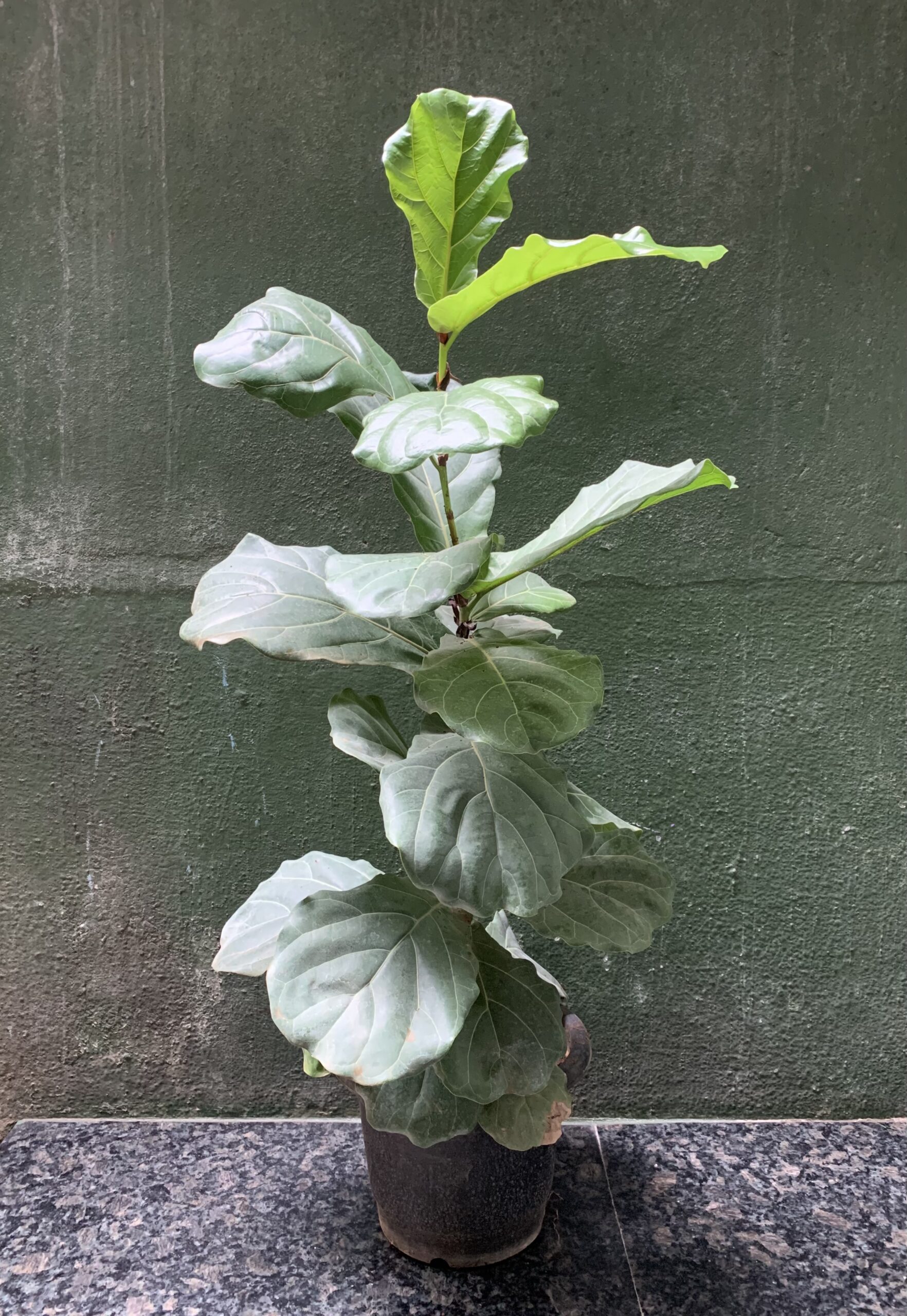
Fiddle Leaf Fig Tree, also known as Ficus Lyrata, is a gorgeous plant that has graced many magazine covers and Instagram accounts with its iconic bright-green fiddle-like foliage. Being natives to African rainforests' hot and wet conditions, the Ficus Lyrata Tree is infamously known to be
finicky houseplants. However, equipped with our care tips and tricks, you can watch your Fiddle Leaf Fig blossom into an unparalleled visual impact in your room for years to come.
General
A very happy Fiddle Leaf Fig can outgrow your house and reach heights of roughly 10 feet. Your fast-growing Fiddle plant will undoubtedly be the statement piece of any room it lives in.In the wild, these natural epiphytes can easily reach heights of 40 feet.Sunlight
Due to its enormous leaves, your Fiddle Leaf Fig requires a lot more sunlight to generate food for itself.Your Fiddle Leaf Fig requires plenty of bright indirect sunlight to moderate full sunlight. Consider placing it close to southern/western facing windows. You can also set it directly on a very bright and sunny eastern window.Direct exposure to hot afternoon sun can burn the leaves, while low light can cause result in slow growth and drooping leaves.Fiddle Fig Plant can not tolerate a temperature below 10℃ and will develop brown spots.Watering
Make sure that the top inch of the soil is dry to touch before watering your Ficus Lyrata. Too little water can cause leaf and colour loss, while too much of it can lead to root rot and ultimately death.You may have to water your plant every 2-3 days during summers and spring and 3-4 times a month during the autumn and winter season.Make sure to use pot and soil with excellent drainage.Your Ficus Lyrata requires high humidity, which can be attained with regular misting or using a pebble tray. It might also be worth investing in a humidifier.Soil
Fiddle leaf figs need a well-draining soil mix with enough aeration to keep their roots healthy.Fertilizer
Your Fiddle Leaf Tree is a heavy feeder and requires monthly Nitrogen-rich fertilization to maintain its dense leaves. You can consider using fertilizers with a 3:1:2 NPK Ratio.Use of fertilizers during the autumn and winter is not required.Toxicity
Fiddle Leaf Plant can be toxic for pets if ingested.Additional Care
Your Fiddle Leaf Fig Ficus does not favour extreme temperature fluctuations. Avoid placing it near drafty areas, air-conditioning, and heating vents.To revive a dying ficus lyrata, or for a bushier growth, chop off the stem's top, and new leaves will sprout.For consistent growth and to avoid leaning, rotate your plant every few days, such that every part receives sunlight.Regularly clean the leaves with a damp cloth to help them absorb sunlight more efficiently and maintain a polished appearance.Keep a close eye on your Fiddle Leaf Fig as it is much more susceptible to pests and diseases as compared to other plants.To prevent the buildup of high salt levels, every month, flush the soil with water until it runs out the bottom.Troubleshooting
Brown spots on leaves: If the soil is moist this is an indication of excessive watering- Let the soil dry out water your plant only when the topsoil is dry to touch.Curling and browning leaf edges, Floppy leaves: Indicates underwatering.






Reviews
There are no reviews yet.