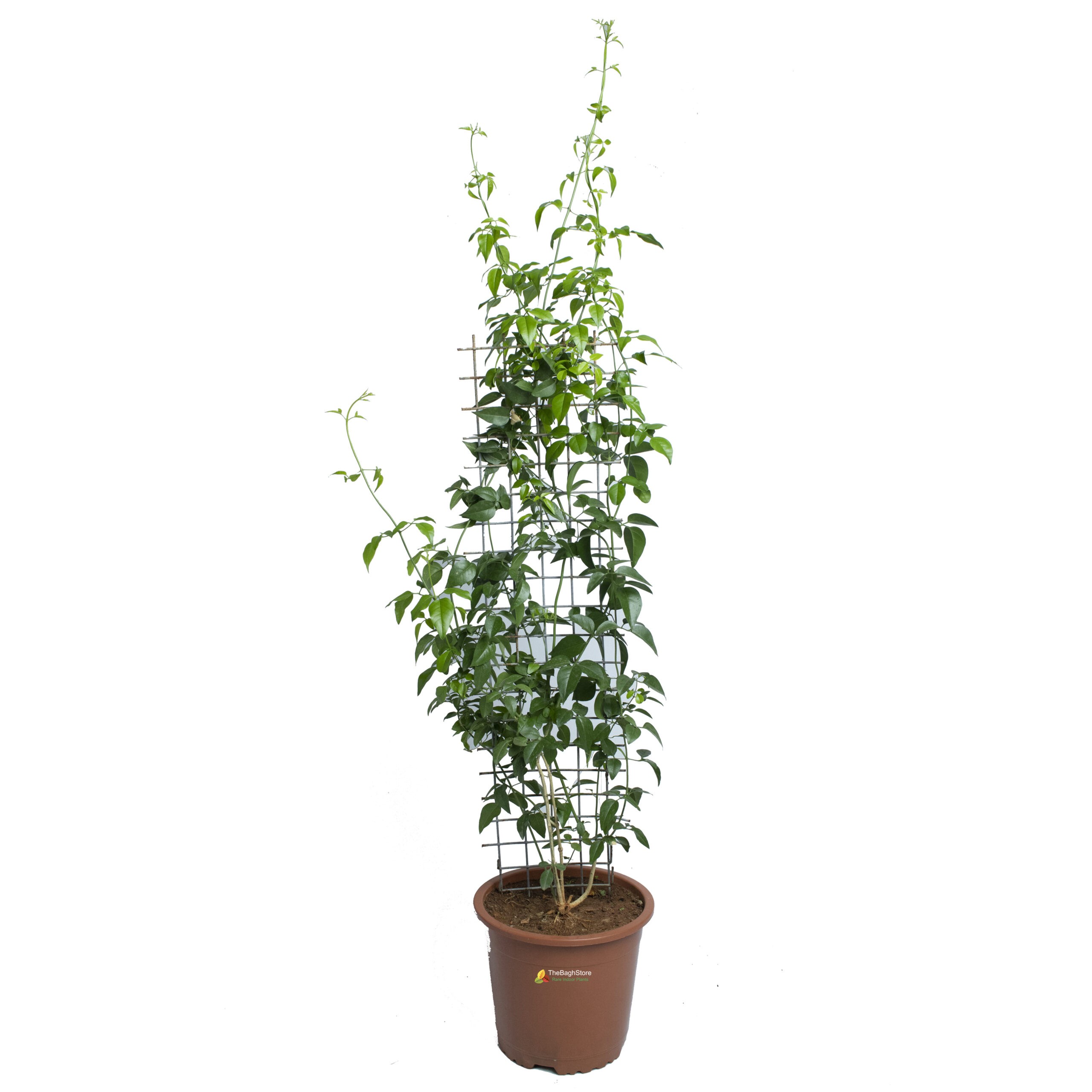
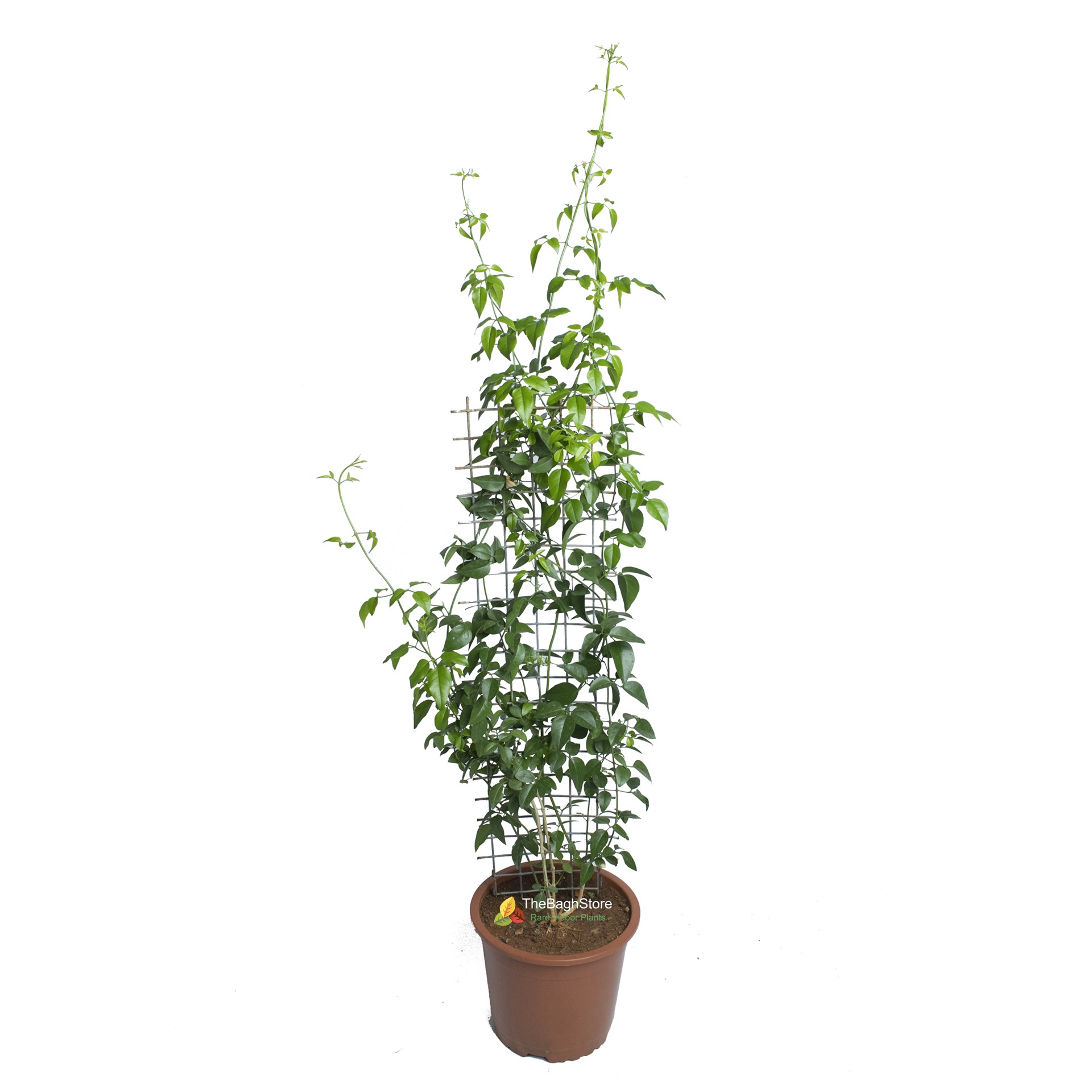
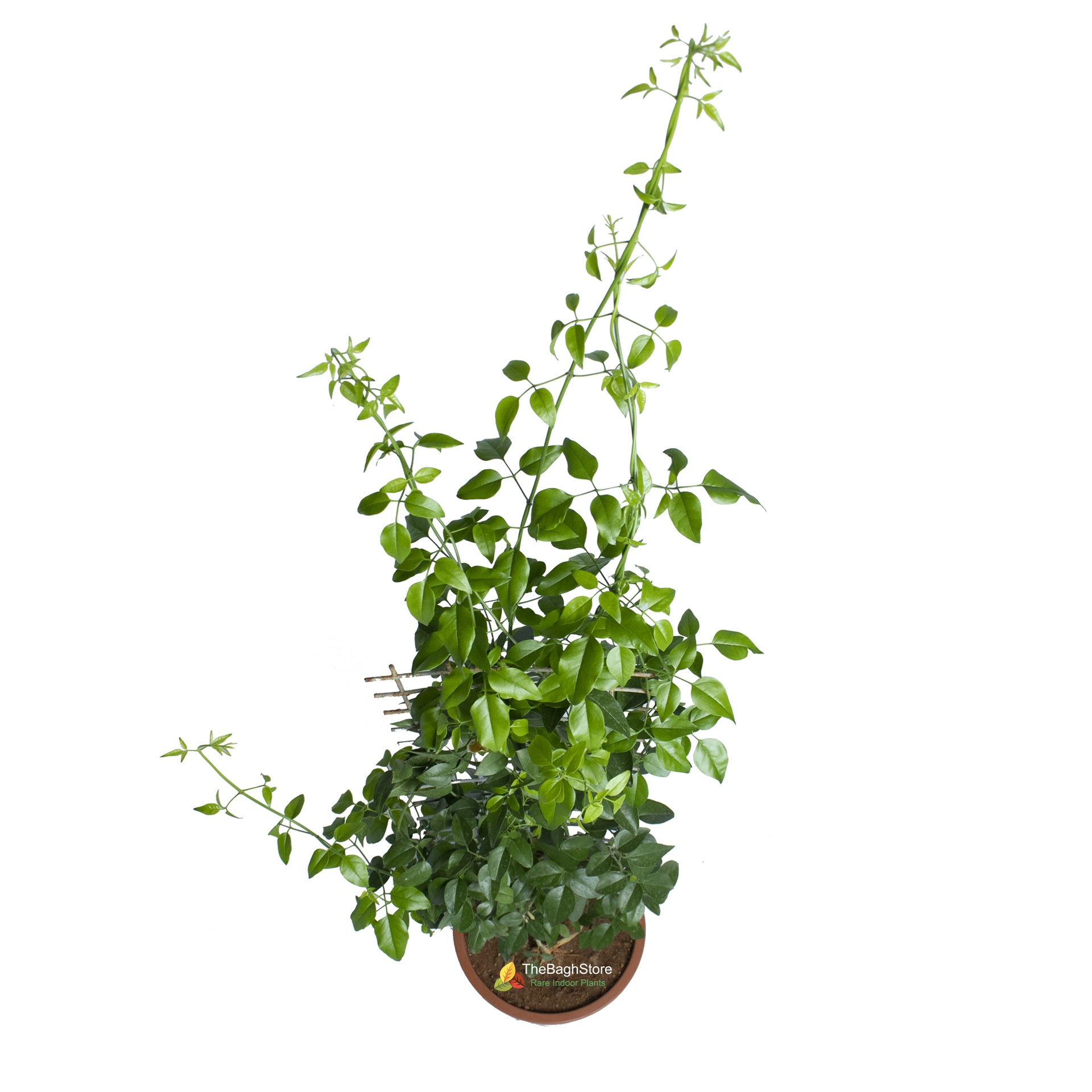
Star jasmine (Trachelospermum jasminoides), sometimes known as Confederate jasmine, is a plant that produces fragrant white blooms that attract pollinators. It's native to China and Japan, but it thrives in California and the rest of the southern United States, where it provides wonderful ground cover and climbing decoration.
General
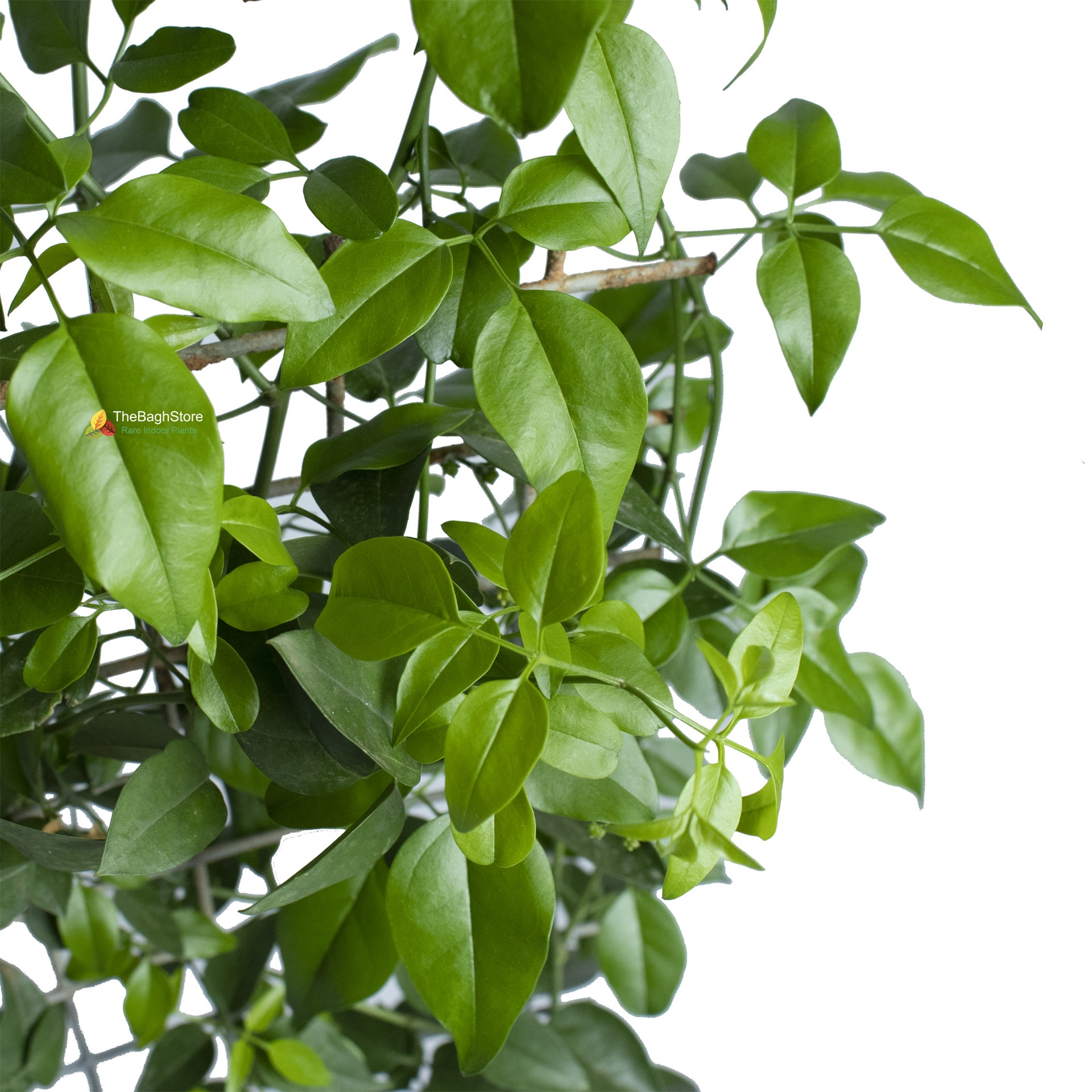
The fragrant, star-shaped white flowers of the Star Jasmine are treasured, as is the blanket of thick, dark green foliage.Some prefer hotter areas and bloom in the summer, while others are everblooming and make excellent houseplants with blossoms all year.Place your Jasmine Vine plant in a Miniature garden.Sunlight
Your Star Jasmine requires full bright sunlight to bloom though it can tolerate partial shade as well.Jasmine Vine grows best in full sun or partial shade. Full sun requires 6 hours or more of direct sunshine each day, whereas moderate shade requires 2?4 hours per day.Watering
Water your Jasmine Climber Creeper plant once the top inch of soil has dried up.Watering in-ground jasmine vine flowers once a week is recommended.Increase the frequency if your star jasmine is exceptionally dry or hot, but let the soil dry out in between.If your jasmine vine is in a container, it will most likely need to be watered every week.Soil
The loamy soil with good drainage is best for your Star Jasmine.Use a good grade organic potting soil if you're growing Star Jasmine in a container.To keep soil moisture from evaporating, cover the soil surrounding plants with a 2-inch layer of mulch.Fertilizer
Fertilize star jasmine with a good quality organic compost or fertiliser at the start of the growing season, and then water the fertiliser.Fertilize your star jasmine once or twice a year, preferably in the early spring or late summer.Toxicity
Your Star Jasmine is non-toxic and will not affect your pets or children.Additional Care
Trim the upward-twining stems if your jasmine vine is used as a groundcover. Stem cuttings can be used to propagate more plants.To shape your Jasmine Climber Creeper, prune out thin, old stems after flowering (which occurs in the spring).Keep an eye out for mealybugs in your Star Jasmine (white, cottony masses under leaves and on stems). Use an alcohol-soaked cotton swab to remove it.Troubleshooting
Does your Star Jasmine plant lose its leaves? Don't be startled. Because If suitable precautions are taken, they will regrow. Give it sufficient light and water.Is your Plant suffering from Root rot? It means you have overwatered your plant. Repot it as soon as you can.





Reviews
There are no reviews yet.